
Fifteen years of research and twelve completed projects, distilled into three things that work together in the water.
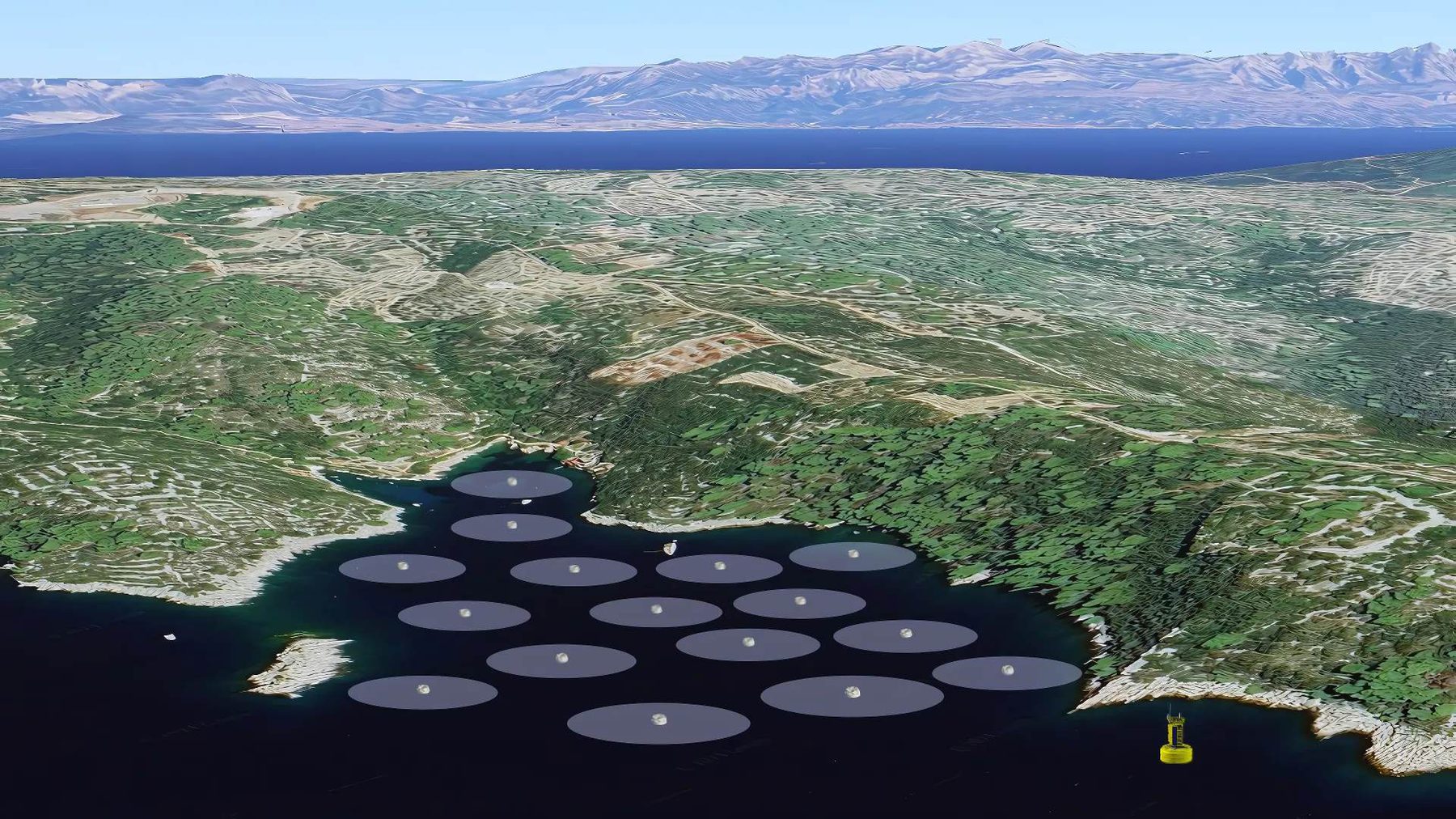
Most seabed scarring comes from a single, repeated action: dropping anchor. Our smart mooring buoys give boats a fixed, bookable place to tie up — with a rigid mooring line that has no surface drag and never sweeps the bottom.
Reservation and payment happen in an app, so a protected bay can welcome visitors without sacrificing the habitat beneath them.
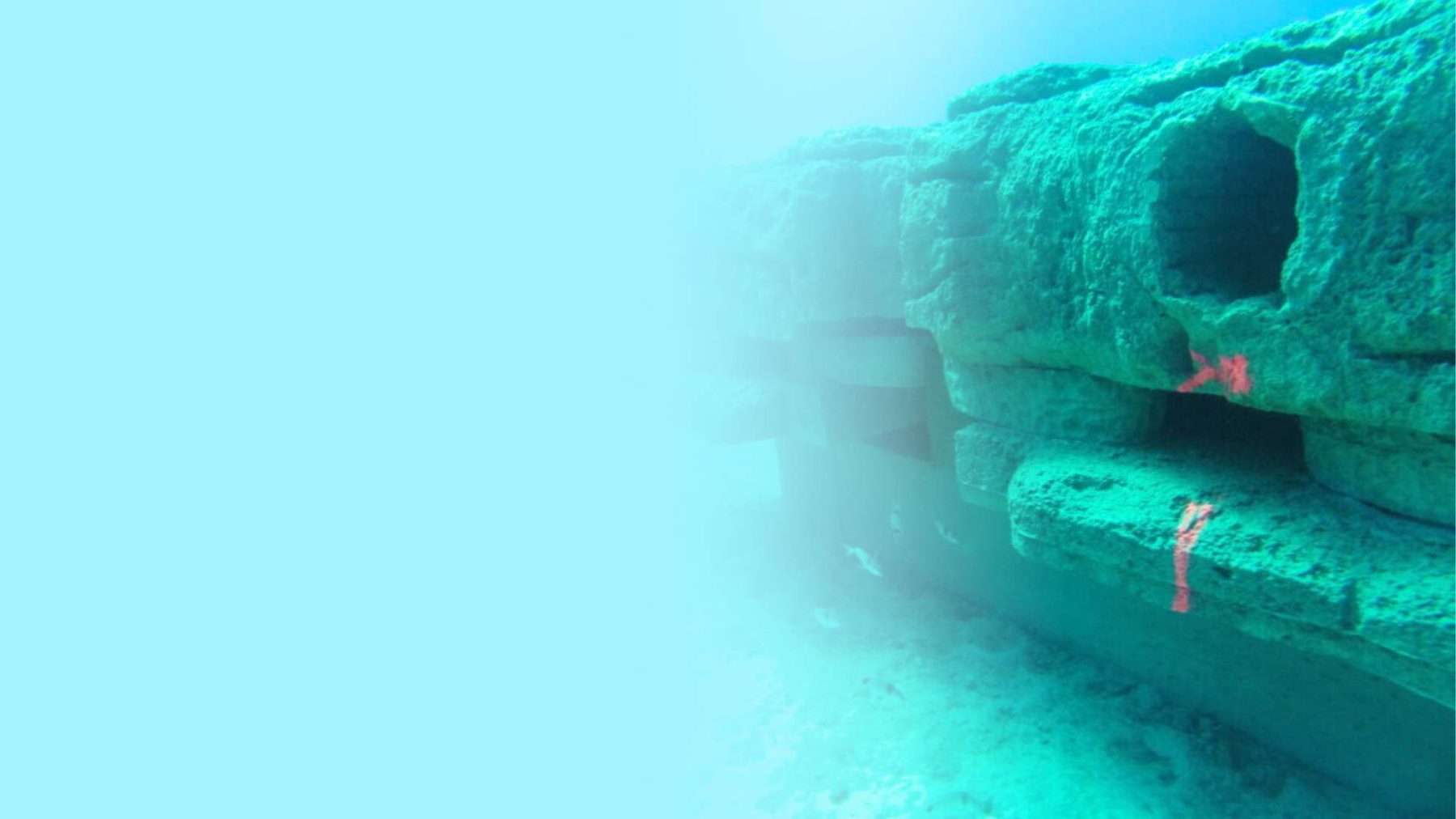
Each mooring sits on an eco-designed anchor that does double duty: holding the line, and offering shelter for marine life. The forms mimic local rock, and the surfaces are textured at every scale — from microscopic grain to hand-sized cavities — so marine life settles in far faster than on ordinary concrete.
We avoid polluting materials entirely — no plastics, no galvanisation, no cathodic protection — using bio-sourced cavities engineered for the species that belong on each site.
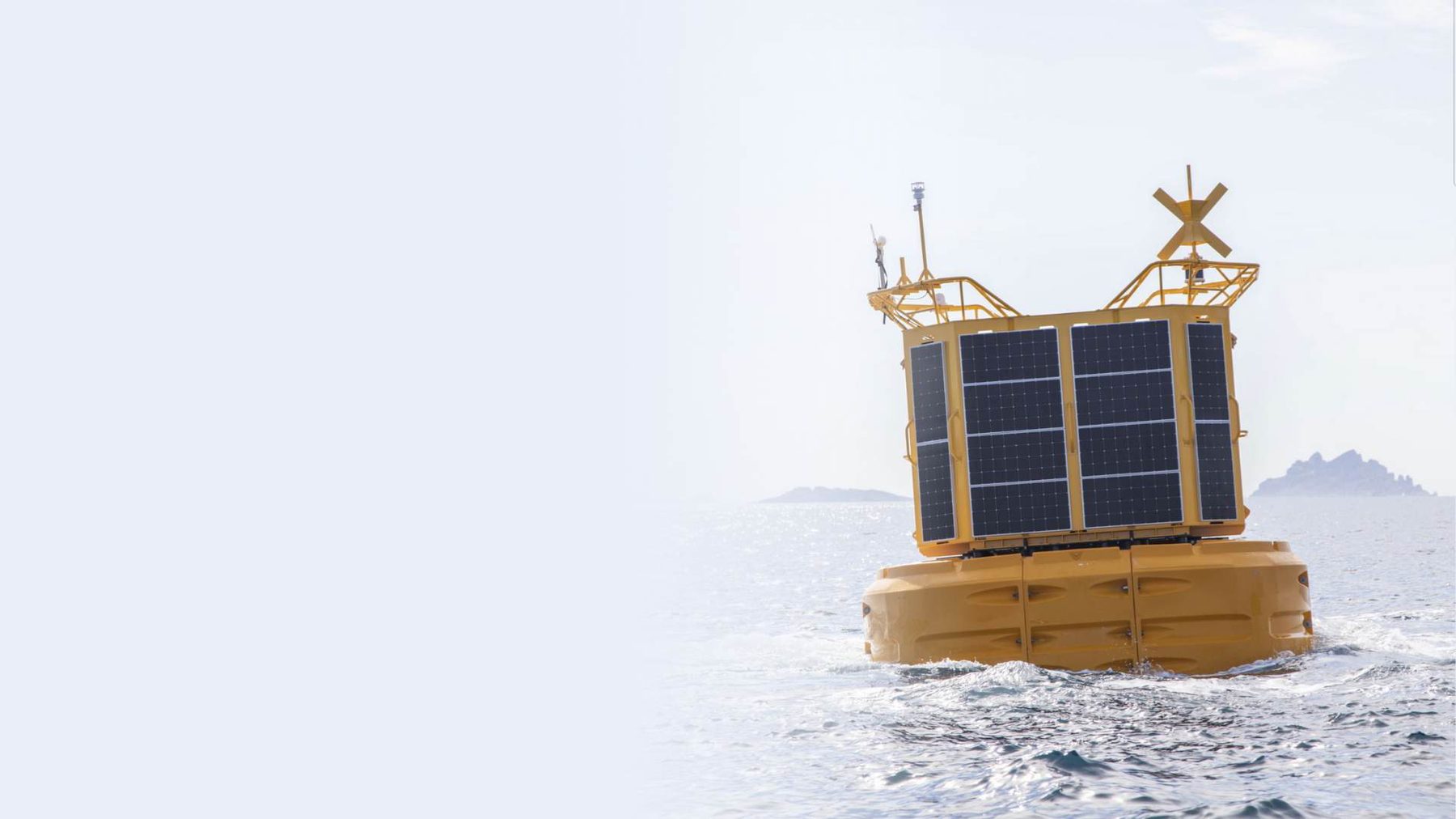
Every mooring area carries at least one data buoy that quantifies its environmental impact over time: the evolution of biodiversity, CO₂ capture, and specific water-quality measurements.
That evidence, verified with our scientific partners, is what turns restoration into something fundable — and honest.
Ecological monitoring in Monaco compared a conventional block after ten years with an eco-designed structure after just two. The difference comes down to two things: the shape of the habitat, and the texture of its surface.
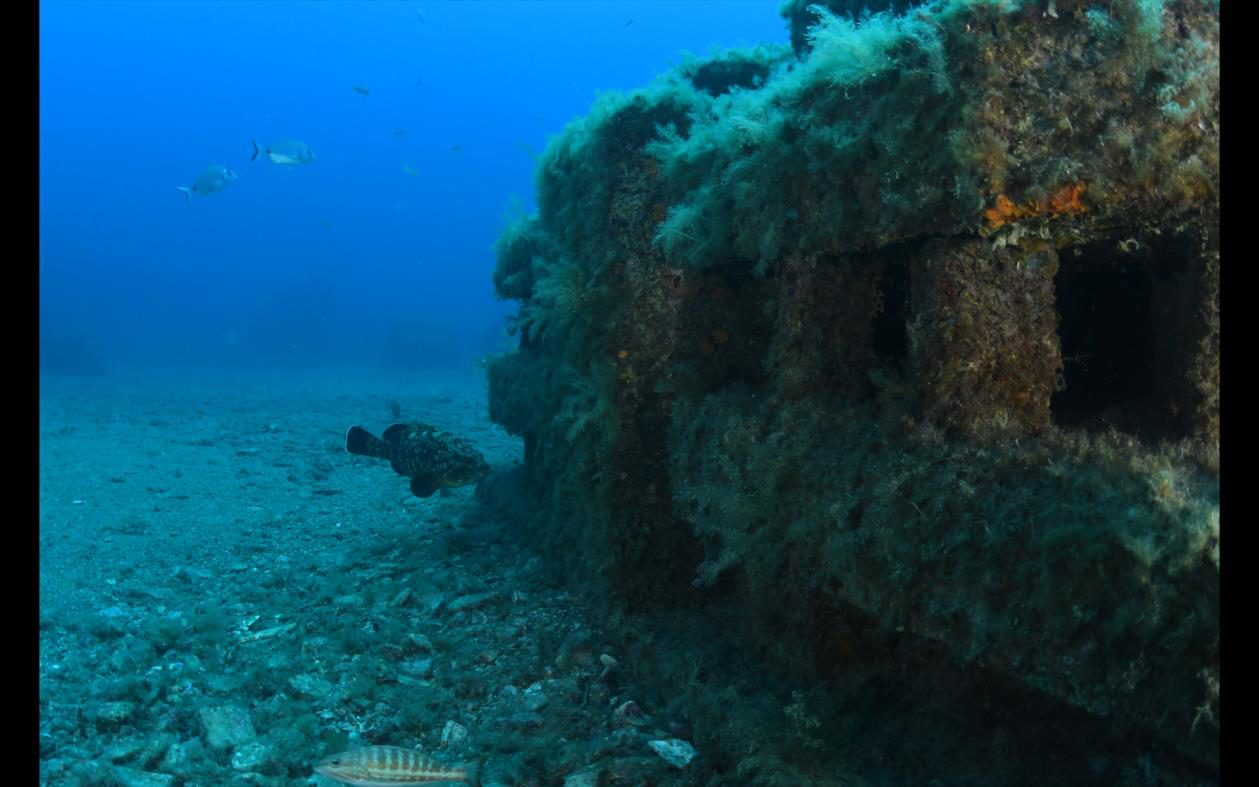
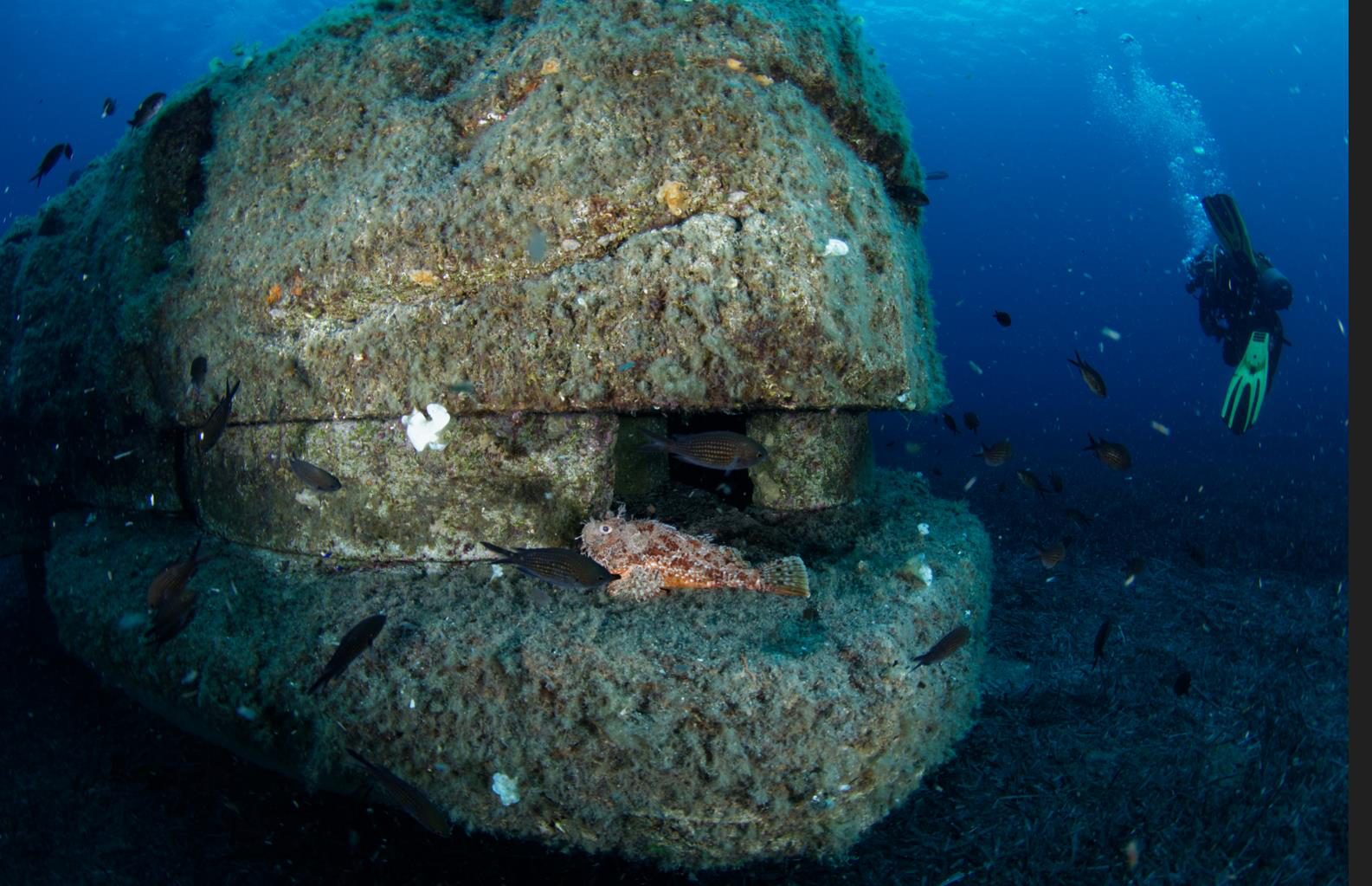
Each structure is dimensioned step by step around the life it's meant to host — across temperate and tropical waters alike.
Marine domain, target species and habitats, bathymetric zone.
The ecological functions and life stages the structure must support.
Internal cavities and surface roughness tuned from micron to metre.
Durable, bio-sourced structures engineered for 50+ year lifespans.
Regenero is built to be financially self-sustaining. Revenue is reinvested into protecting and restoring more habitat — so impact compounds instead of running out.
EcoMoorings prevent further damage to the seabed.
Planting, plastics removal and living anchors rebuild habitat.
Data buoys provide scientifically supported, verified impact.
Mooring fees, donations and carbon & biodiversity credits fund the next site.
Demand for biodiversity credits alone could reach $2bn by 2030 and $69bn by 2050.
— World Economic Forum & McKinsey